 By Olivia Wilson
 Yes. Execution by firing squad is legal in the United States, but only in a small number of states that authorize it. As of 2026, five states permit firing squad executions in some form: Idaho, Mississippi, Oklahoma, South Carolina, and Utah. The rules differ by state. In some places it is only a backup method, while Idaho made the firing squad its primary execution method from July 1, 2026.
The method remains controversial because lethal injection has been the dominant execution method in modern America. However, shortages of execution drugs and legal disputes over lethal-injection protocols have led some states to keep or revive older methods.
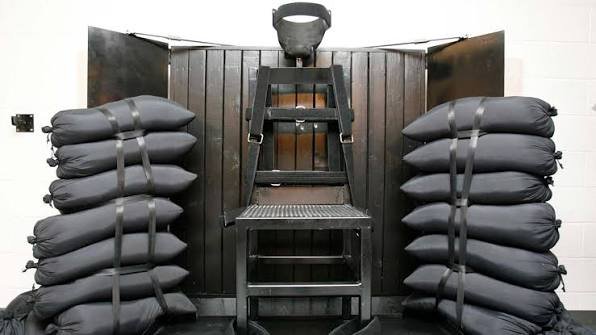
What Is Execution by Firing Squad?
A firing squad execution involves a team of trained shooters firing at a condemned prisoner under a state-approved protocol. The objective is to cause death rapidly by targeting the chest or another designated area. The exact procedure varies by state and corrections department.
Which States Allow Firing Squad Executions?
Five states currently authorize the method.
Idaho has the broadest current law. Legislation signed in 2025 made firing squad the state’s primary execution method beginning July 1, 2026, with lethal injection becoming secondary.
South Carolina also allows firing squad executions, although electrocution remains the default method. Utah permits firing squad in limited situations, including when lethal injection is unavailable. Mississippi and Oklahoma authorize it as a backup method under circumstances defined by state law.
Is a Firing Squad Constitutional?
The main constitutional question comes from the Eighth Amendment, which prohibits “cruel and unusual punishments.”
The U.S. Supreme Court has never ruled that firing squad execution is unconstitutional as a general method. In Wilkerson v. Utah in 1879, the Court rejected a challenge to execution by shooting and concluded that it was not inherently the type of cruel punishment forbidden by the Eighth Amendment.
Modern Supreme Court decisions have also set a high bar for challenges to execution methods. In Bucklew v. Precythe in 2019, the Court said a prisoner challenging a method generally must identify a feasible and readily implemented alternative that would significantly reduce a substantial risk of severe pain.
That does not make every firing-squad procedure automatically lawful. A specific execution protocol can still be challenged if it creates an unconstitutional risk of severe suffering.
Have Firing Squads Been Used Recently?
Yes. South Carolina carried out three firing-squad executions in 2025. Brad Sigmon was executed on March 7, 2025, becoming the first person in the United States executed by firing squad in about 15 years. Mikal Mahdi was executed in April, followed by Stephen Bryant later that year.
According to the Death Penalty Information Center, six firing-squad executions have taken place in the United States since executions resumed in the modern death-penalty era in 1976. The method remains extremely rare compared with lethal injection.
Why Are States Bringing Firing Squads Back?
A major reason is the difficulty states have faced obtaining lethal-injection drugs. Pharmaceutical companies have restricted the use of certain drugs for executions, while lawsuits have challenged execution protocols and drug supplies.
Supporters argue that firing squads can be carried out quickly and do not depend on scarce pharmaceuticals. Critics describe the method as violent and outdated and warn that errors can still occur. Concerns increased after an autopsy following Mikal Mahdi’s 2025 execution reportedly found that only two of three bullets struck him and neither hit his heart as intended.
Can Every Death-Row Prisoner Choose a Firing Squad?
No. A prisoner cannot automatically demand a firing squad anywhere in the United States. Availability depends on state law, the prisoner’s sentence, the state’s execution protocol, and sometimes whether another method can be used.
Some states allow a choice among authorized methods. Others use firing squad only as a backup. Idaho is unusual because the method became its default execution method in 2026.
The Bottom Line
Firing squad execution is legal in parts of the United States. As of 2026, Idaho, Mississippi, Oklahoma, South Carolina, and Utah authorize it in some form. The Supreme Court has not declared firing squads inherently unconstitutional, although individual execution procedures can still face Eighth Amendment challenges.
The method remains rare, but South Carolina’s 2025 executions and Idaho’s 2026 change show that firing squads are still part of modern American capital punishment law.