 By Samantha Paul
 President Donald Trump’s second administration has faced an extraordinary volume of litigation over executive orders and federal policies involving immigration, government spending, universities, elections, federal workers and free speech. Although the administration has also scored important victories—particularly at the U.S. Supreme Court—federal judges have repeatedly concluded that some of its actions exceeded presidential authority, violated federal statutes or infringed constitutional rights. A Reuters review published in August 2026 found particularly heavy losses in First Amendment litigation.
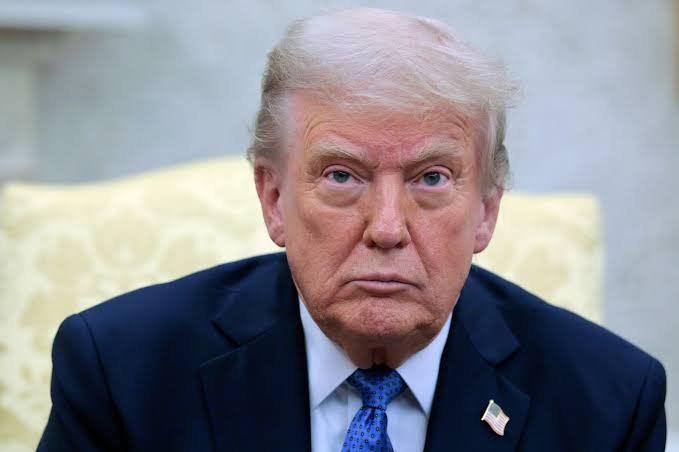
Trump Administration Faced More Than 40 Early Court Losses
Legal resistance developed rapidly after Trump returned to the White House in January 2025.
By late March 2025, the Justice Department itself told the Supreme Court that federal judges had ruled against the administration more than 40 times through temporary restraining orders and preliminary injunctions.
At that point, more than 130 lawsuits had already been filed challenging Trump administration policies. The disputes covered federal-worker layoffs, immigration enforcement, funding cuts, DEI-related programs and the administration’s attempt to restrict birthright citizenship.
The number of lawsuits and rulings continued to grow through 2025 and 2026.
Reuters Finds 75 First Amendment Losses
One of the clearest measurements of the administration’s courtroom difficulties concerns the First Amendment.
A Reuters examination of federal court records identified 75 cases during Trump’s second term in which federal judges ruled that the administration had infringed First Amendment protections, including freedom of speech, religion and the press.
Reuters identified 93 cases in which judges had reached First Amendment issues, meaning the administration lost at the lower-court level in most of those cases.
The disputes included actions involving universities, protesters, law firms, foreign students and news organizations. Some judges concluded that government officials retaliated against individuals or organizations because of protected speech or political positions.
Not all those decisions remain intact. The administration appealed many of them and succeeded in obtaining stays or reversals in 15 of the 75 cases identified by Reuters.
Supreme Court Rejects Birthright Citizenship Order
One of Trump’s most significant legal defeats came at the Supreme Court.
On June 30, 2026, the justices ruled 6-3 against his attempt to restrict birthright citizenship for children born in the United States when neither parent is a U.S. citizen or permanent resident.
Chief Justice John Roberts wrote the majority opinion, joined by conservative Justices Brett Kavanaugh and Amy Coney Barrett and the court’s three liberal justices.
The Court concluded that Trump’s executive order conflicted with the Citizenship Clause of the 14th Amendment and longstanding Supreme Court precedent.
Trump issued a narrower birthright-citizenship order in August 2026, which has already generated another legal challenge.
$100,000 H-1B Visa Fee Ruled Unlawful
The administration also suffered a major immigration-policy defeat involving skilled foreign workers.
In June 2026, U.S. District Judge Leo Sorokin ruled that Trump lacked legal authority to impose a $100,000 fee on new H-1B visas.
The court characterized the charge as an unauthorized tax that Congress had never approved. The administration argued that presidential immigration powers allowed the fee as part of an effort to restrict foreign workers whose entry it considered harmful to U.S. interests.
The administration has appealed the decision.
Courts Block Parts of Trump’s Funding Policies
Trump administration efforts to attach policy conditions to federal money have generated additional defeats.
In July 2026, U.S. District Judge William Orrick blocked federal agencies from enforcing several grant conditions against 11 California and Oregon cities and counties.
The disputed requirements involved DEI policies, immigration cooperation and compliance with presidential executive orders. Orrick found that the local governments were likely to succeed in arguing that executive agencies could not impose broad conditions unrelated to purposes established by Congress.
Other lawsuits have similarly challenged administration attempts to cut or condition funding for universities, research institutions and organizations whose policies conflict with White House priorities.
Pentagon Wind Project Freeze Blocked
Energy policy has also produced courtroom setbacks.
On August 6, 2026, U.S. District Judge Karin Immergut ordered the Pentagon to lift a freeze on reviews of proposed onshore wind-energy projects.
The court found that renewable-energy groups were likely to establish that the Defense Department had violated legal deadlines and could not effectively rewrite statutory requirements to implement the administration’s policy preferences.
Mail Voting Order Remains Tied Up in Court
Trump’s attempt to change mail-voting procedures before the November 2026 midterm elections has produced mixed results.
The Supreme Court gave the administration an important procedural victory on August 24 by lifting one injunction because the states’ challenge was considered premature. However, the Court did not decide whether Trump’s voting restrictions were lawful.
Days later, U.S. District Judge Indira Talwani again temporarily blocked implementation of major portions of the plan while a new challenge proceeds. The administration is appealing.
Has the Trump Administration Lost Every Major Case?
No. Describing the administration’s overall litigation record simply as a series of defeats would be inaccurate.
The Supreme Court has repeatedly given Trump important victories concerning presidential control of executive agencies, federal personnel and other executive-power disputes. In June 2026, for example, the Court substantially expanded presidential authority to remove leaders of independent federal agencies.
Many lower-court losses are also preliminary and may be reversed on appeal.
Still, the volume of adverse rulings is significant. The recurring legal question is whether aggressive use of executive authority can override limits imposed by Congress, federal statutes and constitutional protections. As numerous cases move through the appellate courts, the final legal record of Trump’s second administration remains far from settled.