 By Samantha Paul
 President Donald Trump’s $10 billion lawsuit against the BBC has developed into a major discovery fight over his financial records and documents held by members of his family. The federal case began with Trump’s allegation that a BBC documentary deceptively edited his January 6, 2021 speech and damaged his reputation and business interests. It later took an unexpected turn when those claims prompted the BBC to seek detailed information about Trump’s business empire.
Trump has fought the financial demands, arguing that they are unnecessarily broad and politically motivated. After a magistrate judge ordered the production of some financial material, Trump obtained a temporary pause and was permitted to revise his lawsuit in an effort to remove business-related damages from the case.
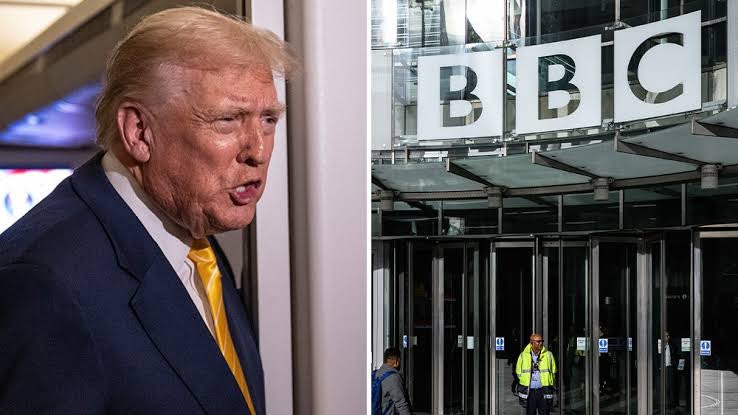
Why Did Trump Sue the BBC?
Trump filed the lawsuit on December 15, 2025, in the U.S. District Court for the Southern District of Florida.
The dispute concerns the BBC Panorama documentary Trump: A Second Chance?, which included edited portions of the speech Trump delivered on January 6, 2021, before the attack on the U.S. Capitol.
Trump alleges that the documentary combined separate sections of his speech in a way that made it appear he directly urged supporters toward violent action. His complaint also objects to the omission of language in which he told supporters to make their voices heard “peacefully and patriotically.”
The BBC acknowledged that the editing created a misleading impression and apologized to Trump. However, the broadcaster has denied that the mistake legally amounts to defamation.
How Much Is Trump Seeking From the BBC?
Trump originally asserted two major claims: defamation and an alleged violation of the Florida Deceptive and Unfair Trade Practices Act, commonly known as FDUTPA.
His original complaint requested at least $5 billion on the defamation count and at least $5 billion on the Florida statutory claim, potentially putting the total amount sought at $10 billion. The lawsuit also requests punitive damages and other relief.
Trump initially claimed that the documentary harmed not only his personal reputation but also his brand, properties, businesses and future financial prospects.
Those allegations opened the door to one of the most significant disputes in the case.
Why Did the BBC Seek Trump’s Financial Records?
The BBC argued that if Trump claimed billions of dollars in economic damage, it was entitled to investigate whether his businesses actually suffered financially following the documentary.
The broadcaster therefore subpoenaed the Donald J. Trump Revocable Trust, which holds extensive Trump business interests.
Its requests included information concerning trust assets, financial interests, properties, business holdings and other records that could help establish the value and performance of Trump-linked businesses.
Trump’s side objected, arguing that the request covered nearly 400 entities, imposed an excessive burden on a non-party trust and sought information that went far beyond what was reasonably necessary for the lawsuit.
Court Initially Orders Financial Information Produced
U.S. Magistrate Judge Enjolique A. Lett held a discovery hearing on July 21, 2026, and subsequently issued an order granting the BBC’s motion to compel in part while denying it in part.
The ruling was significant because Trump’s own complaint alleged “extensive economic harms” and damage to his businesses, brand value and financial prospects.
The court concluded that those allegations made at least some financial information relevant to the case. The ruling therefore created the possibility that litigation Trump initiated against the BBC could expose previously private information concerning his business operations.
Trump Moves to Avoid Broad Financial Disclosure
Trump’s attorneys then changed course.
They sought permission to amend the complaint and eliminate allegations that the BBC documentary caused financial harm to Trump’s businesses. Instead, the revised case would focus on damage to his personal reputation.
U.S. District Judge Roy K. Altman temporarily halted the financial-production requirement on August 6 while considering that request. He subsequently ruled on August 10 that Trump could amend his complaint.
The change could substantially reduce the BBC’s basis for demanding broad financial information, although it did not automatically resolve every discovery dispute. The court indicated that the proper scope of discovery would still have to be determined.
BBC Seeks Records From Trump Family Members
The discovery dispute has expanded beyond financial records.
The BBC has sought subpoenas for Ivanka Trump, Donald Trump Jr. and Trump’s son-in-law Jared Kushner. Its attorneys have argued that the three may possess documents or personal knowledge relevant to Trump’s claims.
Trump’s attorneys oppose the effort and have accused the BBC of seeking politically motivated leverage through discovery.
By August 22, 2026, U.S. District Judge Jeffrey Kuntz, who recently inherited the case, had not ruled on the BBC’s request for assistance in obtaining those materials and testimony.
What Must Trump Prove in the Defamation Case?
Because Trump is unquestionably a public figure, ordinary proof that a statement was incorrect would not be enough to establish defamation under U.S. constitutional law.
He generally must prove “actual malice,” meaning that the challenged publication was made with knowledge that it was false or with reckless disregard for whether it was true.
Trump argues that deliberately combining separate portions of his speech satisfies that demanding standard. The BBC, despite apologizing for the edit, disputes that its conduct creates legal liability and has challenged the lawsuit on additional grounds.
Current Status of the Trump BBC Lawsuit
As of August, 2026, Trump’s lawsuit remains unresolved. There has been no trial verdict and no $10 billion damages award against the BBC.
The financial-records controversy has nevertheless become one of the most important parts of the litigation. Trump succeeded in temporarily preventing the broad disclosure originally ordered and was allowed to narrow his claims, but discovery disputes remain active. The BBC is also attempting to obtain evidence from members of Trump’s family.
The case therefore presents an unusual legal tradeoff: seeking enormous reputational damages may give a defendant broad rights to investigate the plaintiff’s reputation, finances and other evidence allegedly supporting those damages. Whether Trump’s amended claims will ultimately shield most of his business records—and whether his defamation allegations can survive the BBC’s legal challenges—will be central questions as the Florida federal case proceeds.