 By Samantha Paul
 Carter Page, a former foreign-policy adviser to Donald Trump’s 2016 presidential campaign, spent years pursuing a lawsuit over the FBI surveillance conducted against him during the investigation into Russian interference in the 2016 election. His case named former FBI Director James Comey and several other current and former FBI officials as defendants. In 2026, Page reached a reported $1.25 million settlement with the federal government, but his effort to continue pursuing claims against Comey and other individual officials ended when the U.S. Supreme Court declined to hear his appeal on June 15, 2026.
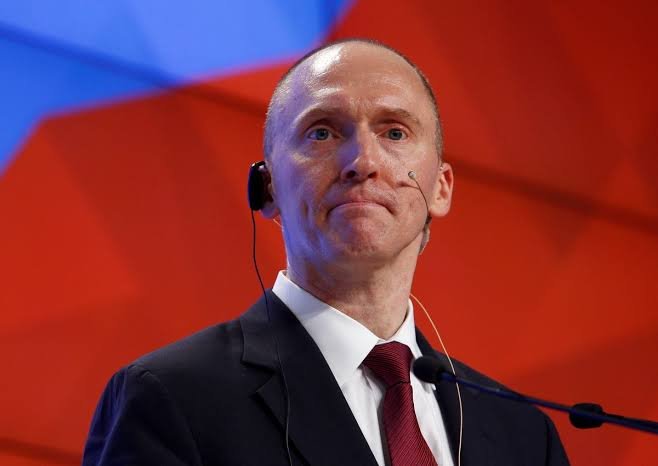
Why Did Carter Page Sue James Comey?
Page filed his lawsuit in the U.S. District Court for the District of Columbia on November 27, 2020. The complaint named James Comey, former FBI Deputy Director Andrew McCabe, Peter Strzok, Lisa Page, Kevin Clinesmith and several other officials, along with the FBI, Department of Justice and United States.
Page originally sought at least $75 million in damages. He alleged that government officials violated his rights while obtaining and renewing Foreign Intelligence Surveillance Act, or FISA, warrants that allowed the FBI to electronically monitor him.
The lawsuit included claims under FISA and constitutional claims against individual officials, Federal Tort Claims Act claims against the United States and Privacy Act claims against federal agencies.
What Happened With the Carter Page FISA Warrants?
The FBI obtained its first FISA warrant targeting Page in 2016 and obtained three renewals in 2017. Page denied being an agent of Russia and was never criminally charged as a result of the investigation.
A Justice Department inspector general investigation later identified serious problems with the warrant applications. The inspector general found 17 significant inaccuracies or omissions across the four applications. Among other problems, investigators failed to provide the court with information that weakened portions of the evidence supporting surveillance.
The inspector general said the applications made the evidence supporting probable cause appear stronger than it actually was. However, the investigation did not find documentary or testimonial evidence establishing that the case agents responsible for the errors intentionally committed misconduct.
Why Was Carter Page’s Lawsuit Dismissed?
In September 2022, U.S. District Judge Dabney L. Friedrich dismissed Page’s second amended complaint.
A central problem was timing. The court concluded that Page’s FISA claims were barred by the applicable statute of limitations. Page had filed the lawsuit in November 2020, but the court determined that he had enough information years earlier to investigate and pursue his claims.
Page asked the court to reconsider the ruling, but that request was denied in January 2023. He then appealed to the U.S. Court of Appeals for the District of Columbia Circuit.
What Did the Appeals Court Decide?
On May 23, 2025, the D.C. Circuit affirmed the dismissal.
The appeals court concluded that Page had actual or inquiry notice of his FISA-related claims by April 2017, when public reporting revealed that he had been subjected to FISA surveillance. Because the lawsuit was not filed until more than three years later, the court determined that the relevant surveillance claims were time-barred.
The court also rejected Page’s remaining claims, although Judge Karen Henderson partially dissented regarding portions of his allegations concerning the use or disclosure of information obtained through surveillance.
Carter Page Received a $1.25 Million Settlement
A significant development came in April 2026, while Page’s petition was pending before the Supreme Court.
The Justice Department reached a settlement with Page concerning his claims against the federal government. The settlement was reported to be worth $1.25 million.
Importantly, the agreement was only a partial resolution of the case. It covered Page’s claims against the federal government but did not settle his claims against James Comey and the other former FBI officials he had sued individually.
The settlement also did not amount to a court ruling that Comey or the other individual defendants were legally liable for Page’s allegations.
Supreme Court Rejects Page’s Appeal Against Comey
Page continued asking the Supreme Court to revive his claims against the individual former officials. His case was docketed as Carter Page v. James B. Comey, et al., No. 25-705.
On June 15, 2026, the Supreme Court denied Page’s petition for a writ of certiorari. The justices provided no explanation for declining to hear the case, which is normal when the Court denies review. Justice Ketanji Brown Jackson did not participate because of her earlier judicial involvement with the litigation.
The denial left the D.C. Circuit’s decision intact and effectively ended Page’s attempt in this lawsuit to pursue the dismissed claims against Comey and the other former FBI officials.
Where Does the Carter Page–James Comey Lawsuit Stand Now?
As of August 2026, Carter Page has obtained the reported $1.25 million settlement from the federal government, but he did not obtain a damages judgment against James Comey.
The Supreme Court’s refusal to review the case means the lower-court dismissal remains in place. The case therefore produced two very different outcomes: a substantial negotiated settlement between Page and the federal government, and a final procedural defeat in his attempt to continue pursuing claims personally against Comey and other former FBI officials.