 By Samantha Paul
 A Texas woman has filed a lawsuit against McDonald’s over allegations that a Sausage McMuffin with Egg purchased at a New York City restaurant caused severe illness and long-term health problems. The case, filed by Yvette Hinds in New York County Supreme Court, centers on a breakfast sandwich she bought during a May 2023 visit to Manhattan.
Hinds alleges that the food contained harmful contaminants and left her violently ill shortly after she ate it. Her lawsuit goes much further than alleging a brief case of food poisoning. She claims the incident resulted in continuing physical problems, substantial medical treatment and an inability to perform some of the work and household activities she previously handled.
McDonald’s and the operator of the restaurant have not accepted those allegations. The local franchise operator has publicly said that it strongly disputes the facts claimed in the lawsuit.
What Happened to Yvette Hinds?
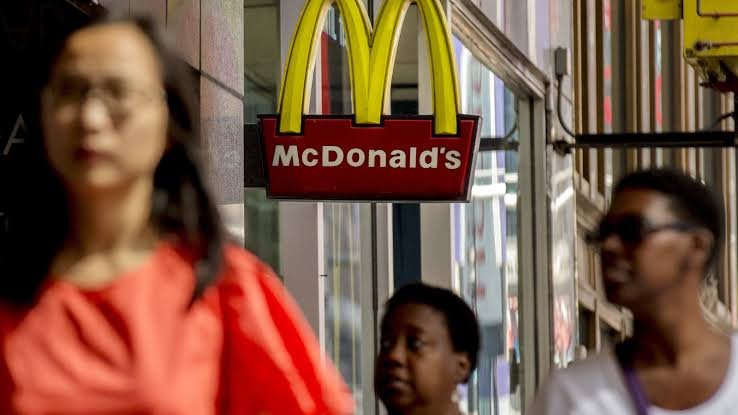
According to the complaint, Hinds purchased a Sausage McMuffin with Egg on May 25, 2023, from McDonald’s restaurant No. 18884 at 1651 Broadway, near West 51st Street in Midtown Manhattan.
Hinds alleges that after consuming the sandwich she became violently ill and nauseated and experienced severe pain and distress throughout her body.
The lawsuit describes the food as contaminated and unfit for human consumption. It alleges that the sandwich may have contained contaminants, toxins, bacteria, parasites, germs or other harmful organisms.
These remain allegations made by Hinds. The publicly reported court documents do not establish exactly what substance was supposedly present in the sandwich or identify a publicly released laboratory test confirming a particular contaminant.
When Was the McDonald’s Lawsuit Filed?
Hinds filed her civil complaint on May 26, 2026, in the Supreme Court of the State of New York, New York County.
Despite its name, New York Supreme Court is primarily the state’s general trial-level court rather than its highest appellate court.
The filing came almost exactly three years after the alleged incident. New York generally provides a three-year limitation period for personal-injury claims under CPLR Section 214.
May 25, 2026, however, was Memorial Day. New York General Construction Law Section 25-a generally permits an act to be performed on the next succeeding business day when a statutory deadline falls on a Saturday, Sunday or public holiday. The May 26 filing therefore should not automatically be viewed as one day outside the normal three-year period.
What Does Hinds Accuse McDonald’s of Doing Wrong?
The complaint primarily focuses on alleged negligence in the handling and sale of the food.
Hinds claims the defendants failed to exercise reasonable care in areas including preparation, storage, handling, inspection, testing, cleaning and service of the breakfast sandwich.
The lawsuit also alleges that the defendants represented the food as safe, wholesome and suitable for people to eat when, according to Hinds, it was not.
For Hinds to ultimately recover on a negligence theory, she would generally need evidence establishing that the defendants owed her a duty of care, breached that duty and that the breach actually caused the injuries for which she seeks compensation.
Causation could become one of the most important issues in the case. Becoming sick after eating food does not by itself necessarily prove that the food caused the illness. Medical records, expert testimony, testing, treatment history and evidence concerning food preparation could therefore become important if the litigation proceeds.
What Injuries Does Yvette Hinds Claim?
The complaint alleges unusually serious consequences from the incident.
Hinds says her physical, nervous and mental systems were seriously and permanently affected. She also claims that she underwent several operations, procedures and treatments in an effort to address her illness and injuries.
The lawsuit further alleges that the condition has affected her ability to work and perform customary household duties.
Specific details about the operations or the precise medical diagnosis responsible for the alleged continuing problems have not been publicly disclosed in the major reports covering the case.
That distinction is important because the complaint’s statements represent the plaintiff’s allegations rather than medical findings that have already been proven in court.
How Much Money Is Yvette Hinds Seeking?
Hinds is seeking monetary damages, but the publicly reported complaint does not specify a fixed dollar amount.
Her claimed damages include medical expenses and anticipated future treatment costs as well as compensation connected to her alleged injuries and inability to carry out normal activities. The lawsuit also seeks attorneys’ fees and court costs.
The amount of any award would depend on the evidence, the legal claims that survive the litigation and whether liability is established.
What Has McDonald’s Said About the Lawsuit?
The local operator of the Midtown Manhattan McDonald’s has rejected Hinds’ version of events.
Paul Goodman, identified as the owner/operator of the restaurant, said the business takes food-safety complaints seriously but strongly disputes the facts alleged in the lawsuit. He also emphasized the restaurant’s commitment to food-safety and food-handling practices.
That response means the central allegations are contested and should not be treated as established findings against McDonald’s or the franchise operator.
Current Status of the Yvette Hinds McDonald’s Lawsuit
As of August 2026, the case remains known primarily from the complaint and the initial public reporting surrounding its filing. No widely reported trial verdict or settlement has established that McDonald’s caused Hinds’ alleged injuries.
The case will ultimately depend on evidence connecting the sandwich to her medical condition and showing whether any defendant was legally responsible for contamination or improper food handling. Until those issues are resolved through litigation or settlement, Hinds’ claims remain allegations rather than proven facts.