 By Samantha Paul
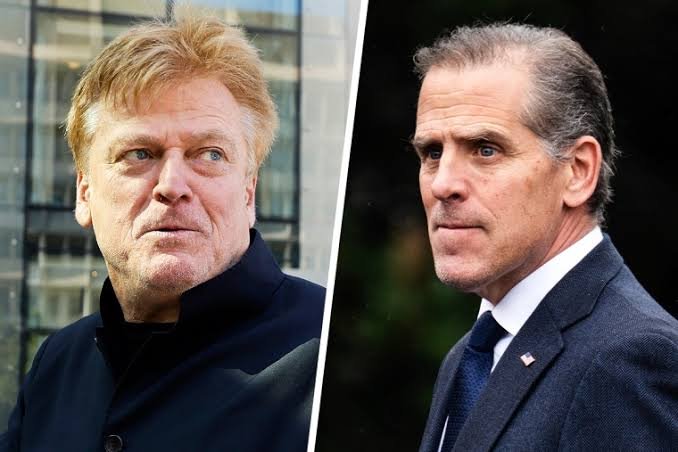
 Hunter Biden has secured a $1.7 million federal judgment against Patrick Byrne, the founder and former CEO of Overstock.com, in a long-running U.S. defamation lawsuit involving allegations of an Iranian bribery scheme. A federal judge in California entered judgment for Biden in July 2026 after concluding that Byrne’s conduct during the litigation justified a default judgment. Byrne has since appealed the case to the U.S. Court of Appeals for the Ninth Circuit, meaning the dispute is not necessarily over.
Why Did Hunter Biden Sue Patrick Byrne?
Hunter Biden filed Robert Hunter Biden v. Patrick M. Byrne in the U.S. District Court for the Central District of California on November 8, 2023.
The lawsuit arose from statements Byrne made claiming that Hunter Biden had contacted the Iranian government in 2021 and proposed a corrupt arrangement. According to Biden’s complaint, Byrne alleged that Hunter offered to use his influence with his father, then-President Joe Biden, to have approximately $8 billion in Iranian funds unfrozen in exchange for $800 million being directed to a numbered account.
Biden denied the allegation and accused Byrne of knowingly publishing false statements to damage his reputation.
What Did Patrick Byrne Say?
The dispute centered particularly on statements Byrne made during a June 2023 interview and later repeated online.
Biden’s complaint said Byrne continued spreading the allegation even though it was false. The controversy intensified after Byrne referred to the alleged transaction again following the October 7, 2023, Hamas attack on Israel. Biden argued that the later posts created an implication that the alleged conduct involving Iranian money had somehow contributed to the circumstances surrounding the attack.
The lawsuit treated Byrne’s claims as statements of fact rather than simply political opinion, which was important because false factual assertions can form the basis of a defamation action.
Why Was a Default Judgment Entered?
The lawsuit was initially expected to proceed to trial, but Byrne’s handling of the case became a major issue.
A trial had been scheduled for July 29, 2025. On the first day, Byrne fired his lead trial lawyer. He also dismissed other attorneys after the court refused to allow his preferred replacement lawyer to participate in the case. Judge Stephen V. Wilson initially declined to impose a default judgment and instead continued the trial, giving Byrne another opportunity to defend the case.
However, further disputes followed involving discovery obligations and compliance with court orders. The court issued orders addressing Byrne’s failure to provide required information and warned that additional sanctions or contempt findings could follow.
By July 2026, Judge Wilson concluded that default judgment was appropriate. This meant the case was resolved without a conventional jury trial determining liability.
How Much Did Hunter Biden Win?
On July 10, 2026, the court granted Hunter Biden’s motion for default judgment. A formal judgment entered on July 15 ordered Patrick Byrne to pay $1,700,001.
The amount consisted of $1 in nominal damages and $1.7 million in punitive damages. The judgment also allows Biden to recover post-judgment interest and qualifying court costs.
Separate from the judgment itself, Byrne had also faced nearly $35,000 in court sanctions associated with his conduct during the proceedings.
The large difference between the nominal and punitive damages is significant. Nominal damages recognize a legal wrong even when substantial compensatory losses have not been established. Punitive damages are intended primarily to punish particularly wrongful conduct and discourage similar behavior.
What Did the Judge Say About Byrne’s Claims?
In considering punitive damages, the court found strong evidence concerning Byrne’s state of mind when making the allegations.
Judge Wilson concluded that the evidence showed intentional misrepresentation and conscious disregard for Biden’s rights. The court found no reliable evidence supporting Byrne’s Iranian bribery accusation and concluded that there was substantial evidence indicating Byrne did not believe the story when he published it.
That issue mattered because Hunter Biden is a public figure. Under U.S. defamation law, public figures generally face the demanding “actual malice” standard, requiring proof that a defamatory statement was made with knowledge of its falsity or reckless disregard for whether it was true.
Patrick Byrne Appeals the Judgment
The litigation remains active because Byrne has appealed.
On August 11, 2026, the appeal was opened in the U.S. Court of Appeals for the Ninth Circuit as Biden v. Byrne, Case No. 26-5133. Byrne is the appellant and Hunter Biden is the appellee.
The appellate court can review whether the district court properly entered default judgment, imposed damages and handled other contested legal issues. It could ultimately affirm the judgment, modify portions of it or reverse and return issues to the district court.
What the Hunter Biden–Patrick Byrne Case Means
The lawsuit illustrates how political speech and commentary involving public figures can still create significant defamation liability. The First Amendment provides broad protection for opinions and political criticism, but it does not automatically protect knowingly or recklessly false factual accusations.
For Patrick Byrne, the immediate result is a $1.7 million judgment plus costs, interest and separate sanctions. For Hunter Biden, the district court judgment represents a substantial victory against one of the more serious allegations made about his foreign dealings. However, because Byrne’s Ninth Circuit appeal is now pending, the final legal outcome will depend on what happens during the appellate proceedings.